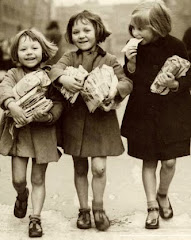
The novel Kira-Kira by Cynthia Kadohata turned out to be exactly as the segments of reviews printed on the back cover stated it to be; it shines and speaks to readers as Kadohata tells Katie Takeshima’s bittersweet story of family, love, and loss. Kadohata is able to see the world through the eyes of a young child in the 1950’s who is forced to make many difficult adjustments in the young life. The deep family relationships bring the characters into perspective; Kadohata details the account of a dynamic family struggling to make a brighter future.
I absolutely love the title of the book, Kira-Kira; before I even knew what it meant, the lyrical quality drew me in. Within the first few pages readers are told that kira-kira is Japanese for “glittering,” such a simple yet prolific word. Lynn tells Katie that the sky is kira-kira because “‘the color is deep but see-through both at the same time’” just like the ocean and people’s eyes (3). As a curious reader, I wanted to know why this word was so important—why was it chosen as the title for this book? It wasn’t until much later in the text that I determined why I thought Kadohata chose this word for the title; to me it represented to relationship between Katie and Lynn as well as Lynn’s “theme.”
The relationship between Katie and Lynn is fascinating. The two are inseparable and Lynn always ensures that her sister is cared for, a duty that Lynn takes very seriously. Lynn is the one that looks out for Katie and has “serious talks” with her; Lynn tells Katie that they are moving to Georgia, that Katie might not make friends at school because of prejudices against them, and she tells Katie when their mother is pregnant. While Lynn takes care of Katie, Katie idolizes Lynn. She looks up to her as a genius and friend. They spend a lot of time looking at the sky, making wishes and promises about their future lives, and worrying about their parents. Katie agrees with everything that Lynn tells her and finally Lynn asks, “‘Do you agree with me all the time just because I say so or because you really, truly agree with me?’ I didn’t see the difference between the two things, so I just said I didn’t know” (60). Katie’s reply illustrates her undeniable love and admiration for her big sister.
Things changes when Lynn becomes friends with a girl from school and her behavior changes from being that of a friend to being that of an older sister, alone. The realistic shift from childish antics to boy-crazy attitudes that adolescents experience is chronicled through Katie’s eyes and is, thus, illustrated as a waste of time. Kadohata brilliantly explores this shift through Katie’s young eyes, expressing her confusion with Lynn’s behavior. She stops agreeing with Lynn and begins to feel like a child in her presence. Katie notices one day, “Whenever I try to talk to her, she made me feel immature, even if she didn’t mean to” (120).
While the relationship between Katie and Lynn changes, so does the relationship of the entire family. A major theme of the book—and the Takeshima family—is duty. Katie’s parents know it is their duty to do what is best for their family and provide them with the things they need; this duty drives the family from Iowa to Georgia, it pushes Katie’s parents to work hours and hours each week I order to save enough money to buy a house, it causes them to take out a loan from the bank in order to get that house—something they would never have done if not for Lynn’s condition. Lynn feels it is her duty to take care of Katie, and Katie feels it is her duty to take care of Sammy. When Lynn becomes sick, Katie believes it is her duty to take care of her. Even after Lynn’s death, both Katie and her parents try to protect and take care of each other the best they can. The relationship of the entire family is strained by Lynn’s sickness and threatens to disintegrate, but after Lynn’s death they go on. Katie remarks on how her father only took two days to grieve for Lynn before getting back into his normal routine, “He needed to think about his children who were still alive, because he was honor-bound to think of the living before the dead” (240). Through Lynn’s death the family is brought back together and each of them take something away from the experience.
I thought the setting of the story affected the characters as they struggle to overcome adversity. What is interesting about the book is that the characters are so realistic, that I would often forget the story was set in the 1950s until the girls would mention something relating to the prejudice they faced or specific time-telling things like how much money a dollar seemed to be. I would become so absorbed in the lives of the characters as simply people, that the time period would float in and out of my consciousness. I am not trying to diminish the significance of the historical setting, but there are so many other aspects of the novel that intrigued me as well. Kadohata does create a setting that is realistic and imaginable—you can live it with Katie.
Kadohata’s book is about hope and the ability to achieve a brighter future. Lynn lived for the future and forced those around her to do the same; she loved to look at the sky, the infinite beyond that was full of the same possibilities as their futures. She was always talking about the great things she would accomplish in her life, the great things that Katie would accomplish in hers. It is by preserving this hope and remembering the infinite possibilities of the future that she was able to look at the world in a different way from those around her. Katie writes in her essay for school, “Lynn could take a simple everyday object, like a box of Kleenex and use it to prove how amazing the world is….This is the main theme of my sister’s life” (224). Lynn believed that everything in life could be described as kira-kira if you look at it the right way. Lynn’s death was a heart-wrenching event for her entire family, and yet they each grew from it in a positive way; they took something and made it beautiful, made it kira-kira.
Sunday, October 25, 2009

CI 5442: Historical Fiction Reponse
Jennifer Donnelly’s novel A Northern Light offers a fascinating and insightful glimpse into the life of a young woman living in upstate New York just after the turn of the twentieth century. Not only does Donnelly expertly tell Mattie’s tale as she struggles to uphold the promises made to her mother while keeping her own dreams alive, but she is able to do so by cleverly juxtaposing the Mattie’s life with that of the actual, tragic life of Grace Brown. Brown’s story provides the perfect foil to Mattie’s resigned choices and forces her to re-evaluate the direction of her life.
The novel is written in alternating chapters of past and present that weave the story of Mattie Gokey with the tragic death of Grace Brown. This choice keeps the reader on the edge of their seat as they search for the story behind Grace Brown’s death and the story that has brought Mattie to this point in her life. It is interesting how starting with the end does nothing to detract from the flow or readers enjoyment of the text; it serves as a catapult into Mattie’s life and the circumstances that brought her to work at the Glenmore. The alternating chapters allow the reader to predict things about Mattie’s life and the events surrounding Brown’s death, only to change those predictions when another piece of the puzzle surrounding both women’s lives is retold. I loved this exchange between the book and me throughout my reading of the text.
Donnelly’s character, Mattie, is a dynamic and realistic figure who posits difficult questions, works hard for her future and to help her family, and fails as often as she succeeds. Mattie’s “realness” allows readers to connect with her and believe that she is someone who could have truly existed in 1906. She is young, spirited, and driven, and yet, she has family duties and social pressures that threaten her dreams. I was able to connect with Mattie, despite the distance of our existences and the differences in our situations, based on her determination and drive—even though people tell her “no” she pushes for the future she wants. There are other characteristics about her would connect her with other readers and aid in further establishing the sense of timelessness in the issues she faces, some of which are still faced by people in today’s society.
Just like the stories that were written by Mattie in the novel, Donnelly’s portrayal of life in the North Woods is dirty and realistic. Things are not “picture perfect” nor are they what they appear to be. When her friend goes into labor Mattie comments on the lack of truth presented about giving birth, “I have read so many books, and not one of them tells the truth about babies….There’s no blood, no sweat, no pain, no fear, no heat, no stink. Writers are damned liars” (93). Mattie wants to give voice to the people around her, the ordinary, everyday people she encounters, but just as Mattie finds her own voice being silenced by the dictates of society, the voices of the average citizens of the North Woods and the world appear to be missing from the histories. Only through Miss Wilcox does Mattie begin to experience the realistic—and often censored—writings of others. Based on those around her, her dual desires were all for naught, “Miss Wilcox had books but no family. Minnie had a family now, but those babies would keep her from reading….Some people…had neither love not books. Nobody I knew had both” (96-97).
The hope that Mattie has for a better future, a future that can somehow encompass all of these desires is claimed by Mattie to be “The Eighth Deadly Sin. The one God left out” (114). This was interesting to me because according to Greek mythology, hope was one of the things found within Pandora’s box; it was almost left inside the box after all the plagues were released into the world—plagues that would indeed be members of the Seven Deadly Sins club. It is sad to think that Mattie has gotten to such a point in her life that something as simple and innocent as “hope” could become paralleled to greed, sloth, wrath, envy, lust, vanity, and pride.
In the present tense chapters of the novel—those dealing with the death of Grace Brown and the discovery of the contents of her letters—Mattie at first plays into the idea that there was a tragic accident between the two lovers and that their “happily ever after” was taken away from them. As she begins to read the letters between the two, she learns the grim truth behind what happened on that summer day. She unearths in a letter a line that sounds very similar to the conversations she has had with Royal Loomis. Grace writes, “the world and you, too, might think that I am to blame, but somehow I can’t—just simply can’t think I am, Chester. I said no so many times, dear. Of course the world will not know that but it’s true all the same” (217). Mattie tells Royal one day, “‘Stop it Royal. I’ll jump out of the boat if you don’t, I swear I will’” (191), only to later think, “I knew I should stop them [Royal’s hands], stop him, find my voice and tell him no. But then the warmth of him…the smell of him…the taste of him, overwhelmed me….And so I said nothing. Nothing at all” (192). She has been in eerily similar situations as Grace and has fallen victim to the same sense of belonging and lust.
Donnelly did a great job creating a counter story to Grace’s about a girl who is able to find that voice and say “no.” Mattie goes off to live the life Grace Brown never got. When asked why she is leaving at such an odd time Mattie replies, “Because Grace can’t” (376). In the story, Donnelly gives life to Grace’s death by allowing Mattie a chance at freedom so cruelly denied to Grace; Mattie becomes the realization of Grace’s future hopes and dreams. Donnelly gives the ghost of Grace Brown a chance to renege on the mistakes and troubles of her life and explore the possibilities of a bright future through Mathilda Gokey—a farmer’s daughter with big city dreams, just like Grace.
The novel is written in alternating chapters of past and present that weave the story of Mattie Gokey with the tragic death of Grace Brown. This choice keeps the reader on the edge of their seat as they search for the story behind Grace Brown’s death and the story that has brought Mattie to this point in her life. It is interesting how starting with the end does nothing to detract from the flow or readers enjoyment of the text; it serves as a catapult into Mattie’s life and the circumstances that brought her to work at the Glenmore. The alternating chapters allow the reader to predict things about Mattie’s life and the events surrounding Brown’s death, only to change those predictions when another piece of the puzzle surrounding both women’s lives is retold. I loved this exchange between the book and me throughout my reading of the text.
Donnelly’s character, Mattie, is a dynamic and realistic figure who posits difficult questions, works hard for her future and to help her family, and fails as often as she succeeds. Mattie’s “realness” allows readers to connect with her and believe that she is someone who could have truly existed in 1906. She is young, spirited, and driven, and yet, she has family duties and social pressures that threaten her dreams. I was able to connect with Mattie, despite the distance of our existences and the differences in our situations, based on her determination and drive—even though people tell her “no” she pushes for the future she wants. There are other characteristics about her would connect her with other readers and aid in further establishing the sense of timelessness in the issues she faces, some of which are still faced by people in today’s society.
Just like the stories that were written by Mattie in the novel, Donnelly’s portrayal of life in the North Woods is dirty and realistic. Things are not “picture perfect” nor are they what they appear to be. When her friend goes into labor Mattie comments on the lack of truth presented about giving birth, “I have read so many books, and not one of them tells the truth about babies….There’s no blood, no sweat, no pain, no fear, no heat, no stink. Writers are damned liars” (93). Mattie wants to give voice to the people around her, the ordinary, everyday people she encounters, but just as Mattie finds her own voice being silenced by the dictates of society, the voices of the average citizens of the North Woods and the world appear to be missing from the histories. Only through Miss Wilcox does Mattie begin to experience the realistic—and often censored—writings of others. Based on those around her, her dual desires were all for naught, “Miss Wilcox had books but no family. Minnie had a family now, but those babies would keep her from reading….Some people…had neither love not books. Nobody I knew had both” (96-97).
The hope that Mattie has for a better future, a future that can somehow encompass all of these desires is claimed by Mattie to be “The Eighth Deadly Sin. The one God left out” (114). This was interesting to me because according to Greek mythology, hope was one of the things found within Pandora’s box; it was almost left inside the box after all the plagues were released into the world—plagues that would indeed be members of the Seven Deadly Sins club. It is sad to think that Mattie has gotten to such a point in her life that something as simple and innocent as “hope” could become paralleled to greed, sloth, wrath, envy, lust, vanity, and pride.
In the present tense chapters of the novel—those dealing with the death of Grace Brown and the discovery of the contents of her letters—Mattie at first plays into the idea that there was a tragic accident between the two lovers and that their “happily ever after” was taken away from them. As she begins to read the letters between the two, she learns the grim truth behind what happened on that summer day. She unearths in a letter a line that sounds very similar to the conversations she has had with Royal Loomis. Grace writes, “the world and you, too, might think that I am to blame, but somehow I can’t—just simply can’t think I am, Chester. I said no so many times, dear. Of course the world will not know that but it’s true all the same” (217). Mattie tells Royal one day, “‘Stop it Royal. I’ll jump out of the boat if you don’t, I swear I will’” (191), only to later think, “I knew I should stop them [Royal’s hands], stop him, find my voice and tell him no. But then the warmth of him…the smell of him…the taste of him, overwhelmed me….And so I said nothing. Nothing at all” (192). She has been in eerily similar situations as Grace and has fallen victim to the same sense of belonging and lust.
Donnelly did a great job creating a counter story to Grace’s about a girl who is able to find that voice and say “no.” Mattie goes off to live the life Grace Brown never got. When asked why she is leaving at such an odd time Mattie replies, “Because Grace can’t” (376). In the story, Donnelly gives life to Grace’s death by allowing Mattie a chance at freedom so cruelly denied to Grace; Mattie becomes the realization of Grace’s future hopes and dreams. Donnelly gives the ghost of Grace Brown a chance to renege on the mistakes and troubles of her life and explore the possibilities of a bright future through Mathilda Gokey—a farmer’s daughter with big city dreams, just like Grace.
Sunday, October 18, 2009
CI 5442: Folklore Response
The collection of folktales found within Virginia Hamilton’s The People Could Fly: American Black Folktales were both surprising and familiar to me—a response that greatly intrigued me. While “Bruh Rabbit” and “Bruh Fox” were creations that were familiar to me through Disney World and animated cartoons, the remaining stories throughout her text were completely new to me, I had never laid eyes on them before, and yet, many of them I knew. How could this be so? What I learned by reading this collection of stories was just how interconnected the human race is and how similar we truly are.
The first story in the book, “He Lion, Bruh Bear, and Bruh Rabbit,” was the first to surprise me. In one of my other classes I was working with others on a presentation on how to use the postcolonial lens. The story we chose to build a lesson around was Stephan Crane’s short story “A Dark Brown Dog.” While the stories are very different, I was struck by the way in which they could be used to complement one another. Both illustrate the danger and power of men, particularly white men, in controlling those around them. I was very excited by this and we discussed it in our group. But the comparisons did not end there.
The animal stories reminded me of the many Native American stories and legends that I have encountered in various projects on Native American peoples and cultures over the years. The Trickster character is found throughout their stories and is common among many other cultures as well. I love the use of these stories to explain how certain, unexplainable things came to be—the alligator’s skin was my favorite! The stories under the section “The Beautiful Girl of the Moon Tower” could have been pulled straight from my collection of Grimm Brothers and Hans Christen Anderson fairy tales, especially “The Two Johns” which is almost exactly the same as the Grimm’s tale “The Little Farmer.” The stories within the next section are a combination of myth, medieval tales, and scary stories that resonate within me. It is the last section that was particularly moving and truly seemed to illustrate the uniqueness and similarity of human experience. These tales, because of their base in reality, were much more moving in their theme of freedom.
The connections I made between the stories collected by Hamilton and my own encounters with folklores of other cultures and time periods, I think serves to emphasize the connectedness found within the human experience. While every culture and every period has a unique identity and history that is important to maintain, remember, and respect, there are many things that are common among us all—the desire to explain the unexplainable; the use of stories to teach our children and families the dangers of the world; the desire to find happiness, freedom, and love; our fascination with magic and mystical beings; and the indomitable spirit of man. Hamilton’s stories bring all of this to the surface within a group of people and the timeless, universal themes found within these stories found connectivity through my own limited experience of the world.
While the stories kept my attention, what I found to be the most useful element of the text were the short segments after each story that provided background information and insight into the creation of each story. Not only did these pieces help explain the dialects, settings, and specific settings for each sections creation, they also provided analysis of the symbolism and meaning behind many of the characters and ideas within story. Hamilton’s ability to provide the different versions and histories of the stories helped me to understand more about the importance, significance, and formation of each tale. The stories in the last section that contained so much personal history for Hamilton and other descendants of former slaves were particularly poignant because of those solid connections between past and present. Hamilton’s ability to bring these texts together and ground them in reality makes this collection a significant piece of our world’s history and culture; a piece that will continue to entertain, enlighten, and educate the world for years to come.
The first story in the book, “He Lion, Bruh Bear, and Bruh Rabbit,” was the first to surprise me. In one of my other classes I was working with others on a presentation on how to use the postcolonial lens. The story we chose to build a lesson around was Stephan Crane’s short story “A Dark Brown Dog.” While the stories are very different, I was struck by the way in which they could be used to complement one another. Both illustrate the danger and power of men, particularly white men, in controlling those around them. I was very excited by this and we discussed it in our group. But the comparisons did not end there.
The animal stories reminded me of the many Native American stories and legends that I have encountered in various projects on Native American peoples and cultures over the years. The Trickster character is found throughout their stories and is common among many other cultures as well. I love the use of these stories to explain how certain, unexplainable things came to be—the alligator’s skin was my favorite! The stories under the section “The Beautiful Girl of the Moon Tower” could have been pulled straight from my collection of Grimm Brothers and Hans Christen Anderson fairy tales, especially “The Two Johns” which is almost exactly the same as the Grimm’s tale “The Little Farmer.” The stories within the next section are a combination of myth, medieval tales, and scary stories that resonate within me. It is the last section that was particularly moving and truly seemed to illustrate the uniqueness and similarity of human experience. These tales, because of their base in reality, were much more moving in their theme of freedom.
The connections I made between the stories collected by Hamilton and my own encounters with folklores of other cultures and time periods, I think serves to emphasize the connectedness found within the human experience. While every culture and every period has a unique identity and history that is important to maintain, remember, and respect, there are many things that are common among us all—the desire to explain the unexplainable; the use of stories to teach our children and families the dangers of the world; the desire to find happiness, freedom, and love; our fascination with magic and mystical beings; and the indomitable spirit of man. Hamilton’s stories bring all of this to the surface within a group of people and the timeless, universal themes found within these stories found connectivity through my own limited experience of the world.
While the stories kept my attention, what I found to be the most useful element of the text were the short segments after each story that provided background information and insight into the creation of each story. Not only did these pieces help explain the dialects, settings, and specific settings for each sections creation, they also provided analysis of the symbolism and meaning behind many of the characters and ideas within story. Hamilton’s ability to provide the different versions and histories of the stories helped me to understand more about the importance, significance, and formation of each tale. The stories in the last section that contained so much personal history for Hamilton and other descendants of former slaves were particularly poignant because of those solid connections between past and present. Hamilton’s ability to bring these texts together and ground them in reality makes this collection a significant piece of our world’s history and culture; a piece that will continue to entertain, enlighten, and educate the world for years to come.
Saturday, October 3, 2009
CI 5442: Poetry Response #2
Naomi Shihab Nye’s book of poetry 19 Varieties of Gazelle was an illuminating text that made me question some of my own beliefs about the Middle East and the world in general. The title does nothing to really prepare the reader for what they are about to encounter as they flip through page after page of thoughtful reflections, remembrances, and dreams. Not only does Nye’s book provide her readers with an insider’s look into life as Middle Easterner, she also provides deep insight into the often forgotten and misunderstood culture of a faraway land. Nye uses her experiences and knowledge to create a bridge between different worlds and creates images that unite.
What I enjoyed the most about Nye’s poetry was the sense of self that is examined and reflected in many of the poems about either her own experiences or the experiences of her family and friends from around the world. Nye illustrates the struggle of many to remain true to their family’s and culture’s beliefs within the ever-expanding reach of the western world. In their struggle though, many are able to find a balance and accept the old with the new. Her father is able to live in America with his daughters and constantly tells them how lucky they are to have opportunity and freedom in the United States, and yet, he maintains many of the traditions of his own people within his new land. This struggle is felt by many, but especially those who come from cultures that are misunderstood by westerners in issues surrounding social mores and norms. I enjoyed learning more about Middle Eastern culture, especially the recurring theme of hospitality.
One of my favorite poems form the collection is “Red Brocade.” This poem not only brings up the importance of hospitality in Arabic culture and history, but also presents the reader with a strong desire to return to simpler times when sharing what you had was more important than pining for what you lacked. I love thinking that there was a time when a stranger would come to the door and you would care for him for three days “before asking who he is/ where he’s from/ where he’s headed” (40). A time when trust was given and received. My favorite lines of the poem offer the reasoning for waiting these three days; “That way, he’ll have strength/ enough to answer./ Or, by then you’ll be/ such good friends/ you don’t care” (40). By ending with the single line of “you don’t care” I felt a sense of hope that people could see beyond the differences and notice only the similarities between people, the things that make us human. Why should people care about the ways we differ when there are so many more ways that we are the same?
Continuing on with identifying the ways in which people are the same, I come to the other thing I noticed about Nye’s poetry that I really enjoyed. Nye is able to present the differences while providing readers with similarities. As I read the poems I could see the stories behind them in my mind. I knew that she was describing a place that I had never been before, but it was a place I wanted to visit. I wanted to surround myself with children running around in “little suitcoats/ and velvet dresses….eating 47 Jordan almonds,” (59) I wanted to see the gardens that have been tended so carefully, the grandmothers caring for their grandchildren, people laughing and singing. There were so many things that seemed a natural part of human existence within her poems, that although they were centered around people and places that I know little about, I know those feelings and experiences all the same; love, hope, fear, desire, all things that are a part of my life the way they are a part of all human experience—or at least they should be.
I think Nye’s collection of poems could teach the world a thing or two about understanding others. Even though the people and situations may be different the experiences are often startlingly similar. Her poems express a desire for peace and understanding between people and she brings to life the unseen, innocent victims of extenuating circumstance. She tells in a poem about “Mr. Dajani Calling from Jericho” in which he desires only letters and books, saying how even though bombs are being dropped on them from American planes, “I want you to know/ we never stop holding our branch of the olive tree/ even though for some it is such a little branch” (131). But, I think the quote on dedication page brings the point home for all, “If you look at the Muslim, Christian, and Jewish religions, their first commandments are the same: ‘Thou shalt not kill.’ It’s not taken seriously.”
What I enjoyed the most about Nye’s poetry was the sense of self that is examined and reflected in many of the poems about either her own experiences or the experiences of her family and friends from around the world. Nye illustrates the struggle of many to remain true to their family’s and culture’s beliefs within the ever-expanding reach of the western world. In their struggle though, many are able to find a balance and accept the old with the new. Her father is able to live in America with his daughters and constantly tells them how lucky they are to have opportunity and freedom in the United States, and yet, he maintains many of the traditions of his own people within his new land. This struggle is felt by many, but especially those who come from cultures that are misunderstood by westerners in issues surrounding social mores and norms. I enjoyed learning more about Middle Eastern culture, especially the recurring theme of hospitality.
One of my favorite poems form the collection is “Red Brocade.” This poem not only brings up the importance of hospitality in Arabic culture and history, but also presents the reader with a strong desire to return to simpler times when sharing what you had was more important than pining for what you lacked. I love thinking that there was a time when a stranger would come to the door and you would care for him for three days “before asking who he is/ where he’s from/ where he’s headed” (40). A time when trust was given and received. My favorite lines of the poem offer the reasoning for waiting these three days; “That way, he’ll have strength/ enough to answer./ Or, by then you’ll be/ such good friends/ you don’t care” (40). By ending with the single line of “you don’t care” I felt a sense of hope that people could see beyond the differences and notice only the similarities between people, the things that make us human. Why should people care about the ways we differ when there are so many more ways that we are the same?
Continuing on with identifying the ways in which people are the same, I come to the other thing I noticed about Nye’s poetry that I really enjoyed. Nye is able to present the differences while providing readers with similarities. As I read the poems I could see the stories behind them in my mind. I knew that she was describing a place that I had never been before, but it was a place I wanted to visit. I wanted to surround myself with children running around in “little suitcoats/ and velvet dresses….eating 47 Jordan almonds,” (59) I wanted to see the gardens that have been tended so carefully, the grandmothers caring for their grandchildren, people laughing and singing. There were so many things that seemed a natural part of human existence within her poems, that although they were centered around people and places that I know little about, I know those feelings and experiences all the same; love, hope, fear, desire, all things that are a part of my life the way they are a part of all human experience—or at least they should be.
I think Nye’s collection of poems could teach the world a thing or two about understanding others. Even though the people and situations may be different the experiences are often startlingly similar. Her poems express a desire for peace and understanding between people and she brings to life the unseen, innocent victims of extenuating circumstance. She tells in a poem about “Mr. Dajani Calling from Jericho” in which he desires only letters and books, saying how even though bombs are being dropped on them from American planes, “I want you to know/ we never stop holding our branch of the olive tree/ even though for some it is such a little branch” (131). But, I think the quote on dedication page brings the point home for all, “If you look at the Muslim, Christian, and Jewish religions, their first commandments are the same: ‘Thou shalt not kill.’ It’s not taken seriously.”
Wednesday, September 30, 2009
CI 5442: Poetry Response #1
Paul Fleischman’s Joyful Noise: Poems for Two Voices was a surprising and refreshing take on the age old poetry game. Fleischman was able to find a piece of middle ground between poems that are either too abstract for young adults and poems that don’t offer enough dimension to create a text that is enjoyable for all, teachers too. By incorporating the two different voices, Fleischman reminds his audience that poetry is often meant to be read out loud and with this book it is essential to the text and meaning.
Fleischman’s use of parallel lines of poetry that are meant to be read in tandem illustrate the oral tradition of all literature and revisits the lyrical history of poetry. The combination of two voices reading the lines together heightens the reader’s experience by adding to the rhythm and flow of the poem from beginning to end. I had to have my roommates read some of the poems with me in order to get the right effect, and although we struggled a bit at first, in the end the sound was excellent. At one point I had them reading the text while I sat and listened with my eyes closed. It was almost as if I was sitting in a movie theater or listening to headphones; the combination of two voices reaching my ears at different points and then simultaneously was a new way to hear a poem and I thoroughly enjoyed it.
One of my favorite poems was “Mayflies.” Not only does the poem provide the reader with facts about the mayfly’s short lifespan, it also takes the reader inside the mind of a mayfly to hear their thoughts as they live their lives for one day. It was hard for me not to feel some sympathy for the mayfly even though I know—or at least think I know—that they do not have thoughts the same way that humans do. Who knew that a pesky summer bug could make me ponder the relatively insignificant existence of insects and humans alike.
My other favorite poem was “Honeybees,” which told the bees tale from two different perspectives, that of the queen and that of a low-level worker bee. I enjoyed reading about the daily lives and feelings of these two different members of bee society; again, I found myself sympathizing with the poor worker bee who literally works all day while the queen is mostly pampered. In this poem as well, Fleischman is able to make the insects come to life and create emotions in his reader.
Both of these poems relate the struggles of insects in our world, but they also reflect the struggles of humans. In the grand scheme of things, humans and mayflies share a short lifespan in which the goal is to live life to the fullest. The honeybees live in a society in which one person controls the group, in the human world this is often also the case. If one looks at it through a socio-economic lens, the Queen bee represents the small percentage of people who control the world’s money and power. Fleischman does an amazing job in creating texts that provide information about insects as much as they mirror and give insight into the human condition.
I should also mention the illustrations in the text—by Eric Beddows— that accentuate the text. My favorite illustration is the drawing of the moth in “The Moth’s Serenade.” In the picture the accurate yet comic looking moth is clearly singing, eyes closed, and his first set of legs clasped together. He is clearly performing the very serenade that Fleischman has written as if it were his own. The combination of lyrical poems with beautiful—and sometimes amusing—illustrations makes this text worth the added effort in reading aloud.
Fleischman’s use of parallel lines of poetry that are meant to be read in tandem illustrate the oral tradition of all literature and revisits the lyrical history of poetry. The combination of two voices reading the lines together heightens the reader’s experience by adding to the rhythm and flow of the poem from beginning to end. I had to have my roommates read some of the poems with me in order to get the right effect, and although we struggled a bit at first, in the end the sound was excellent. At one point I had them reading the text while I sat and listened with my eyes closed. It was almost as if I was sitting in a movie theater or listening to headphones; the combination of two voices reaching my ears at different points and then simultaneously was a new way to hear a poem and I thoroughly enjoyed it.
One of my favorite poems was “Mayflies.” Not only does the poem provide the reader with facts about the mayfly’s short lifespan, it also takes the reader inside the mind of a mayfly to hear their thoughts as they live their lives for one day. It was hard for me not to feel some sympathy for the mayfly even though I know—or at least think I know—that they do not have thoughts the same way that humans do. Who knew that a pesky summer bug could make me ponder the relatively insignificant existence of insects and humans alike.
My other favorite poem was “Honeybees,” which told the bees tale from two different perspectives, that of the queen and that of a low-level worker bee. I enjoyed reading about the daily lives and feelings of these two different members of bee society; again, I found myself sympathizing with the poor worker bee who literally works all day while the queen is mostly pampered. In this poem as well, Fleischman is able to make the insects come to life and create emotions in his reader.
Both of these poems relate the struggles of insects in our world, but they also reflect the struggles of humans. In the grand scheme of things, humans and mayflies share a short lifespan in which the goal is to live life to the fullest. The honeybees live in a society in which one person controls the group, in the human world this is often also the case. If one looks at it through a socio-economic lens, the Queen bee represents the small percentage of people who control the world’s money and power. Fleischman does an amazing job in creating texts that provide information about insects as much as they mirror and give insight into the human condition.
I should also mention the illustrations in the text—by Eric Beddows— that accentuate the text. My favorite illustration is the drawing of the moth in “The Moth’s Serenade.” In the picture the accurate yet comic looking moth is clearly singing, eyes closed, and his first set of legs clasped together. He is clearly performing the very serenade that Fleischman has written as if it were his own. The combination of lyrical poems with beautiful—and sometimes amusing—illustrations makes this text worth the added effort in reading aloud.
Sunday, September 27, 2009
CI 5442: Realistic Fiction Response #3
John Green’s novel Looking for Alaska was more than I expected it to be. Right away I was intrigued by Miles as he fidgeted restlessly during his empty going away party. It was amusing to see his view of the high school experience shift as his choice of friends changed from who he sat with out of “social necessity” to those few he couldn’t bear to lose (Green 3). The moment that captured me was in the first few pages when Miles tells his parents why he has decided to attend boarding school; “So this guy, François Rebelais. He was this poet. And his last words were ‘I go to seek a Great Perhaps.’ That’s why I’m going. So I don’t have to wait until I die to start seeking a Great Perhaps” (Green 5). Already, I knew as a reader that Miles was about to enter into an adventure that would change both his life and the way he sees the world.
When Miles arrives at his Culver Creek Preparatory School, it is clear by the imaginary conversation that he plays through his head that he is ready to change his image and reputation. He learns right away that there are certain rules that you must follow in order to successfully navigate life at Culver Creek; the main rules being, toughen up, don’t get caught, and don’t rat anyone out. Throughout the text, these rules play an important part in driving the characters and presents reader’s with an insider’s look into the workings of an adolescent society. In this society Green presents his readers with four central characters that change Pudge’s life: the Colonel, the strategic and honor-bound leader; Alaska, the moody, beautiful, and fearless prankster; and Takumi, the rapping, fox-loving tag-along; and Lara, the quiet, Romanian cutie. Each character has a distinct personality and position among the “gang.” By providing readers with such dynamic characters, Green is able to draw readers into the microcosm that is Culver Creek. I felt myself sitting alongside the Colonel, Pudge, and Alaska as they sat in the Smoking Hole puffing away on cigarette’s, I was there running alongside Pudge and Takumi as they lit firecrackers and ran through the dark woods surrounding the school, and I was there when Pudge walked away from the Sunny Konvenience Kiosk feeling selfish, hateful, sad, and confused. Green’s use of detail captures the audience in this adolescent world by giving using the reader’s senses and feelings to draw them in. He describes Alaska’s lingering scent in such a way that I could close my eyes and conjure the smell myself.
Another key feature of Green’s text is his development and reoccurring questions of human pain and existence. Mr. Hyde acts as a voice of reason and motivating force on their personal journeys of discovery. By first forcing them to question “What is the most important question human beings must answer?” he is setting up and providing scaffolding for one of the major themes of the book: the twisted labyrinth of life—what is it and what is the point? In consideration of Alaska’s essay and her tragic death, this becomes the second question of his course, “How will you—you personally—ever get out of this labyrinth of suffering?” (Green 215). He tells them, “I am interested in how you are able to understand the fact of suffering into your own understanding of the world, and how you hope to navigate through life in spite of it” (Green 215). This question—coming after the unknown accidental or suicidal death of Alaska—is a heavy question that is difficult for the Colonel and Pudge to answer. The question is probing and as a reader I too stepped back in order to try and analyze my own reactions to such a question. How do I define the labyrinth and how can I continue living within its confusion and complexity.
The characters in the book come up with their own answers to that question based on their personal experience with Alaska—and I must say that I shared that experience with them in my own answer to Mr. Hyde’s proposition. Alaska’s answer had been “Straight &Fast,” an answer that led her to leave the world goodbye far too early (Green 155). While at first this answer appeals to both the Colonel and Pudge, they eventually come up with their own ideologies concerning the labyrinth in opposition to Alaska’s. The Colonel says, “After all this time, it still seems to me like the straight and fast is the only way out—but I choose the labyrinth. The labyrinth blows, but I choose it” (Green 217). For all the regret, pain, and guilt that he has suffered, the Colonel has chosen life and all its pain over the escape found by Alaska. Pudge also comes to terms with living in the labyrinth realizing that, “we had to forgive to survive the labyrinth” (Green 218).
In his final paper, Pudge makes some of my favorite remarks from the text. He gives readers an immense amount of hope by presenting to them the awesome strength of a human being; faith. Pudge is able to accept his failings as a friend and yet he knows that he could let his grief draw him into “paralysis” as it did for Alaska, but he saw what this did for her and he decides to face his failures instead. He reminds the audience that while there are horrible and painful events in a person’s life, “Those awful things are survivable, because we are as indestructible as we believe ourselves to be….We need never be hopeless, because we can never be irreparably broken” (Green 220). While he might be speaking specifically to other teenagers—Green’s audience—these words also resonated with me. During the text I experienced a few rough days of my own and when I read these words it reminded me of the power of the human mind and its ability to overcome great adversity. Pudge still believes in the Great Perhaps, “I spite of having lost her” (Green 219).
Overall, Green does a remarkable job in creating characters, emotions, sensations, and events that are relatable to readers. He frames his story around a boy who finds enjoyment in endings but ultimately understands that it is the middle that really counts. Pudge’s own discovery and the questions and challenges he must face force the reader to look within themselves. I loved this book because it had a little bit of everything and yet still managed to tackle difficult human ponderings in a meaningful way; “that part of us greater than the sum of our parts cannot begin and cannot end, and so it cannot fail” (Green 221).
When Miles arrives at his Culver Creek Preparatory School, it is clear by the imaginary conversation that he plays through his head that he is ready to change his image and reputation. He learns right away that there are certain rules that you must follow in order to successfully navigate life at Culver Creek; the main rules being, toughen up, don’t get caught, and don’t rat anyone out. Throughout the text, these rules play an important part in driving the characters and presents reader’s with an insider’s look into the workings of an adolescent society. In this society Green presents his readers with four central characters that change Pudge’s life: the Colonel, the strategic and honor-bound leader; Alaska, the moody, beautiful, and fearless prankster; and Takumi, the rapping, fox-loving tag-along; and Lara, the quiet, Romanian cutie. Each character has a distinct personality and position among the “gang.” By providing readers with such dynamic characters, Green is able to draw readers into the microcosm that is Culver Creek. I felt myself sitting alongside the Colonel, Pudge, and Alaska as they sat in the Smoking Hole puffing away on cigarette’s, I was there running alongside Pudge and Takumi as they lit firecrackers and ran through the dark woods surrounding the school, and I was there when Pudge walked away from the Sunny Konvenience Kiosk feeling selfish, hateful, sad, and confused. Green’s use of detail captures the audience in this adolescent world by giving using the reader’s senses and feelings to draw them in. He describes Alaska’s lingering scent in such a way that I could close my eyes and conjure the smell myself.
Another key feature of Green’s text is his development and reoccurring questions of human pain and existence. Mr. Hyde acts as a voice of reason and motivating force on their personal journeys of discovery. By first forcing them to question “What is the most important question human beings must answer?” he is setting up and providing scaffolding for one of the major themes of the book: the twisted labyrinth of life—what is it and what is the point? In consideration of Alaska’s essay and her tragic death, this becomes the second question of his course, “How will you—you personally—ever get out of this labyrinth of suffering?” (Green 215). He tells them, “I am interested in how you are able to understand the fact of suffering into your own understanding of the world, and how you hope to navigate through life in spite of it” (Green 215). This question—coming after the unknown accidental or suicidal death of Alaska—is a heavy question that is difficult for the Colonel and Pudge to answer. The question is probing and as a reader I too stepped back in order to try and analyze my own reactions to such a question. How do I define the labyrinth and how can I continue living within its confusion and complexity.
The characters in the book come up with their own answers to that question based on their personal experience with Alaska—and I must say that I shared that experience with them in my own answer to Mr. Hyde’s proposition. Alaska’s answer had been “Straight &Fast,” an answer that led her to leave the world goodbye far too early (Green 155). While at first this answer appeals to both the Colonel and Pudge, they eventually come up with their own ideologies concerning the labyrinth in opposition to Alaska’s. The Colonel says, “After all this time, it still seems to me like the straight and fast is the only way out—but I choose the labyrinth. The labyrinth blows, but I choose it” (Green 217). For all the regret, pain, and guilt that he has suffered, the Colonel has chosen life and all its pain over the escape found by Alaska. Pudge also comes to terms with living in the labyrinth realizing that, “we had to forgive to survive the labyrinth” (Green 218).
In his final paper, Pudge makes some of my favorite remarks from the text. He gives readers an immense amount of hope by presenting to them the awesome strength of a human being; faith. Pudge is able to accept his failings as a friend and yet he knows that he could let his grief draw him into “paralysis” as it did for Alaska, but he saw what this did for her and he decides to face his failures instead. He reminds the audience that while there are horrible and painful events in a person’s life, “Those awful things are survivable, because we are as indestructible as we believe ourselves to be….We need never be hopeless, because we can never be irreparably broken” (Green 220). While he might be speaking specifically to other teenagers—Green’s audience—these words also resonated with me. During the text I experienced a few rough days of my own and when I read these words it reminded me of the power of the human mind and its ability to overcome great adversity. Pudge still believes in the Great Perhaps, “I spite of having lost her” (Green 219).
Overall, Green does a remarkable job in creating characters, emotions, sensations, and events that are relatable to readers. He frames his story around a boy who finds enjoyment in endings but ultimately understands that it is the middle that really counts. Pudge’s own discovery and the questions and challenges he must face force the reader to look within themselves. I loved this book because it had a little bit of everything and yet still managed to tackle difficult human ponderings in a meaningful way; “that part of us greater than the sum of our parts cannot begin and cannot end, and so it cannot fail” (Green 221).
CI 5442: Realistic Fiction Response #2
I had no idea what I was getting myself into when I started reading Meg Rosoff’s novel How I Live Now, and while I enjoyed the book, I am still trying to come to terms with everything within its pages. One of the first things I had to get used to was the lack of punctuation with quotations. This confused me at first, but after a while it was something that I was able to become comfortable with. It wasn’t until later in the book that I realized the purpose of this technique—the retrospection of Daisy’s experience in England compared to later sections of the novel that are set in the present and thus can make use of direct quotes contained by conventional use of punctuation. This clever shift compliments Daisy’s story and allows readers to sense an amount of authenticity in the creation of the tale. By framing the novel in this retrospective way, Rosoff leads the audience through pages and pages of set-up before she is able to answer the title’s question and give the reader Daisy’s life now.
One of the things I struggled with in the text was its classification in our class as realistic fiction. Although Rosoff is able to create characters and setting that are set in the present and could be real, there is enough fantastical evidence to deny its entrance into the genre of realistic fiction. The first of which is the “magical” characteristics of Daisy’s cousins and sometimes even Daisy herself. Somehow, Edmond is able to hear Daisy’s thoughts. Right after meeting Daisy at the airport, driving her home with a cigarette in hand—at the age of fourteen—“he looked at me in his funny dog way, and he said You’ll get used to it. Which was strange too because I hadn’t said anything out loud” (Rosoff 4). Later we meet Isaac—Edmond’s twin—who is extremely apathetic, except when it comes to his own family or animals, and is able to “communicate” with animals. Then there is Piper who is constantly described as being part fairy and also possesses some sort of empathetic or communicative powers herself. Later, when the girls are separated from the boys, Daisy and Edmond are able to “communicate” across great distances. The only explanation that I can make is to remember that this section of the story was supposedly written during Daisy’s time spent in a hospital, recovering after her traumatic experience in England. Perhaps, her view of things is slightly more dramatic and magical because of a lingering wistfulness to return “home” that drives her every thought, but, that is only one interpretation.
The next issue I had was the non-platonic love relationship between Daisy and her cousin Edmond. Now, my hang-up with this is most likely a construct of my society which has forever claimed that relationships with cousins should be strictly platonic. While Daisy’s relationship with Edmond was something that did grow on me due to its genuine and sweet portrayals, I did keep waiting to find out that they weren’t really cousins and thus there love wasn’t “forbidden.”
The next issue concerned the war. This one was the easiest to internalize and accept. Rosoff is clearly making a political statement against the stupidity and yet, perhaps, impending war that will cross countries and divide nations. Throughout the novel it is made clear that no one knows anything about the war’s cause. This observation is set against the absurd behavior of most adults in the story who are unable to see the pointlessness of the war and only serve to fall victim to gossip and anarchy. I think it is interesting to note that only the children—who spend almost the entire novel successfully surviving without adults—are able to clearly the war for what it is. They see how ridiculous the behavior of the adults around them is and even when they try to assist adults, they fail because they are not taken seriously, leading to dire consequences. Jonathon tells Daisy how Edmond tried to get the people at Gateshead to listen to him; “The small community was too settled and too frightened to run and hide in the woods because of something in the air and the premonition of a couple of kids. It wasn’t enough to make them leave” (Rosoff 187-188).
Overall, the text seemed to resemble the framework of a dark fairy tale. The daughter is sent away by her father and stepmother, a stepmother who doesn’t love the daughter and controls the father. The daughter goes to live with a group of magical beings in the country. They begin to care for each other and as things are just beginning to go well, something monumental occurs and they are separated. After years of struggling to stay alive and return home, eventually our heroes are back together again, trying to mend their broken relationships with love. While I love this, and Rosoff creates this new type of fairy tale beautifully, it is still difficult for me to categorize as realistic fiction without providing provisions for Daisy’s mental state of mind.
What I absolutely loved about the text was the subtle-yet-not-subtle dialogue surrounding Daisy’s battle with an eating disorder. It is interesting to see into her mind and watch as she explains her behavior regarding food. I was impressed at Rosoff’s ability to sneak this into the text without it being obvious for quite some time. At first the reader learns of Daisy’s fear that her stepmother was trying to poison her—this was something I wrote off as a humorous “evil step-mom” kind of thing. Next, we observe her not eating after arriving in England; again, this can be explained by anxiety over being in a new place. Soon though, we hear the concern of the other characters and Daisy herself admits her relationship with food; “after a while I discovered how much I liked the feeling of being hungry and the fact that it drove everyone stark raving mad and cost my father a fortune in shrinks and also it was something I was good at” (Rosoff 44). After the war begins to take its toll, Daisy begins to change her mind about food. Suddenly, there isn’t enough and being hungry isn’t as enjoyable when forced upon her. Daisy sees how thin Piper became, “which once upon a time I would have thought was a good thing and now I thought was just what happened when you’re nine years old and don’t have enough food to grow properly” (Rosoff 130). Daisy has grown and understands the pointlessness of her previous relationship with food in the same way she learns to love others more than herself. This shift in Daisy’s character allows Rosoff to broach a very difficult topic. It is important that readers can identify with a character that is able to justify their behavior and is led into different thinking by their own realizations. Rosoff gives them a chance to see how Daisy’s eating disorder becomes ridiculous to her in her own time; it is a realization that is self-activated and not pushed upon her by an authority figure.
Rosoff was able to create a modern day tale that combines elements of reality and fae by drawing readers into a possible future for our world. I think I would need to read the book again and come to terms with the more unconventional aspects of the story before I could present it to a class—something I would like to be able to do in time.
One of the things I struggled with in the text was its classification in our class as realistic fiction. Although Rosoff is able to create characters and setting that are set in the present and could be real, there is enough fantastical evidence to deny its entrance into the genre of realistic fiction. The first of which is the “magical” characteristics of Daisy’s cousins and sometimes even Daisy herself. Somehow, Edmond is able to hear Daisy’s thoughts. Right after meeting Daisy at the airport, driving her home with a cigarette in hand—at the age of fourteen—“he looked at me in his funny dog way, and he said You’ll get used to it. Which was strange too because I hadn’t said anything out loud” (Rosoff 4). Later we meet Isaac—Edmond’s twin—who is extremely apathetic, except when it comes to his own family or animals, and is able to “communicate” with animals. Then there is Piper who is constantly described as being part fairy and also possesses some sort of empathetic or communicative powers herself. Later, when the girls are separated from the boys, Daisy and Edmond are able to “communicate” across great distances. The only explanation that I can make is to remember that this section of the story was supposedly written during Daisy’s time spent in a hospital, recovering after her traumatic experience in England. Perhaps, her view of things is slightly more dramatic and magical because of a lingering wistfulness to return “home” that drives her every thought, but, that is only one interpretation.
The next issue I had was the non-platonic love relationship between Daisy and her cousin Edmond. Now, my hang-up with this is most likely a construct of my society which has forever claimed that relationships with cousins should be strictly platonic. While Daisy’s relationship with Edmond was something that did grow on me due to its genuine and sweet portrayals, I did keep waiting to find out that they weren’t really cousins and thus there love wasn’t “forbidden.”
The next issue concerned the war. This one was the easiest to internalize and accept. Rosoff is clearly making a political statement against the stupidity and yet, perhaps, impending war that will cross countries and divide nations. Throughout the novel it is made clear that no one knows anything about the war’s cause. This observation is set against the absurd behavior of most adults in the story who are unable to see the pointlessness of the war and only serve to fall victim to gossip and anarchy. I think it is interesting to note that only the children—who spend almost the entire novel successfully surviving without adults—are able to clearly the war for what it is. They see how ridiculous the behavior of the adults around them is and even when they try to assist adults, they fail because they are not taken seriously, leading to dire consequences. Jonathon tells Daisy how Edmond tried to get the people at Gateshead to listen to him; “The small community was too settled and too frightened to run and hide in the woods because of something in the air and the premonition of a couple of kids. It wasn’t enough to make them leave” (Rosoff 187-188).
Overall, the text seemed to resemble the framework of a dark fairy tale. The daughter is sent away by her father and stepmother, a stepmother who doesn’t love the daughter and controls the father. The daughter goes to live with a group of magical beings in the country. They begin to care for each other and as things are just beginning to go well, something monumental occurs and they are separated. After years of struggling to stay alive and return home, eventually our heroes are back together again, trying to mend their broken relationships with love. While I love this, and Rosoff creates this new type of fairy tale beautifully, it is still difficult for me to categorize as realistic fiction without providing provisions for Daisy’s mental state of mind.
What I absolutely loved about the text was the subtle-yet-not-subtle dialogue surrounding Daisy’s battle with an eating disorder. It is interesting to see into her mind and watch as she explains her behavior regarding food. I was impressed at Rosoff’s ability to sneak this into the text without it being obvious for quite some time. At first the reader learns of Daisy’s fear that her stepmother was trying to poison her—this was something I wrote off as a humorous “evil step-mom” kind of thing. Next, we observe her not eating after arriving in England; again, this can be explained by anxiety over being in a new place. Soon though, we hear the concern of the other characters and Daisy herself admits her relationship with food; “after a while I discovered how much I liked the feeling of being hungry and the fact that it drove everyone stark raving mad and cost my father a fortune in shrinks and also it was something I was good at” (Rosoff 44). After the war begins to take its toll, Daisy begins to change her mind about food. Suddenly, there isn’t enough and being hungry isn’t as enjoyable when forced upon her. Daisy sees how thin Piper became, “which once upon a time I would have thought was a good thing and now I thought was just what happened when you’re nine years old and don’t have enough food to grow properly” (Rosoff 130). Daisy has grown and understands the pointlessness of her previous relationship with food in the same way she learns to love others more than herself. This shift in Daisy’s character allows Rosoff to broach a very difficult topic. It is important that readers can identify with a character that is able to justify their behavior and is led into different thinking by their own realizations. Rosoff gives them a chance to see how Daisy’s eating disorder becomes ridiculous to her in her own time; it is a realization that is self-activated and not pushed upon her by an authority figure.
Rosoff was able to create a modern day tale that combines elements of reality and fae by drawing readers into a possible future for our world. I think I would need to read the book again and come to terms with the more unconventional aspects of the story before I could present it to a class—something I would like to be able to do in time.
Subscribe to:
Posts (Atom)